

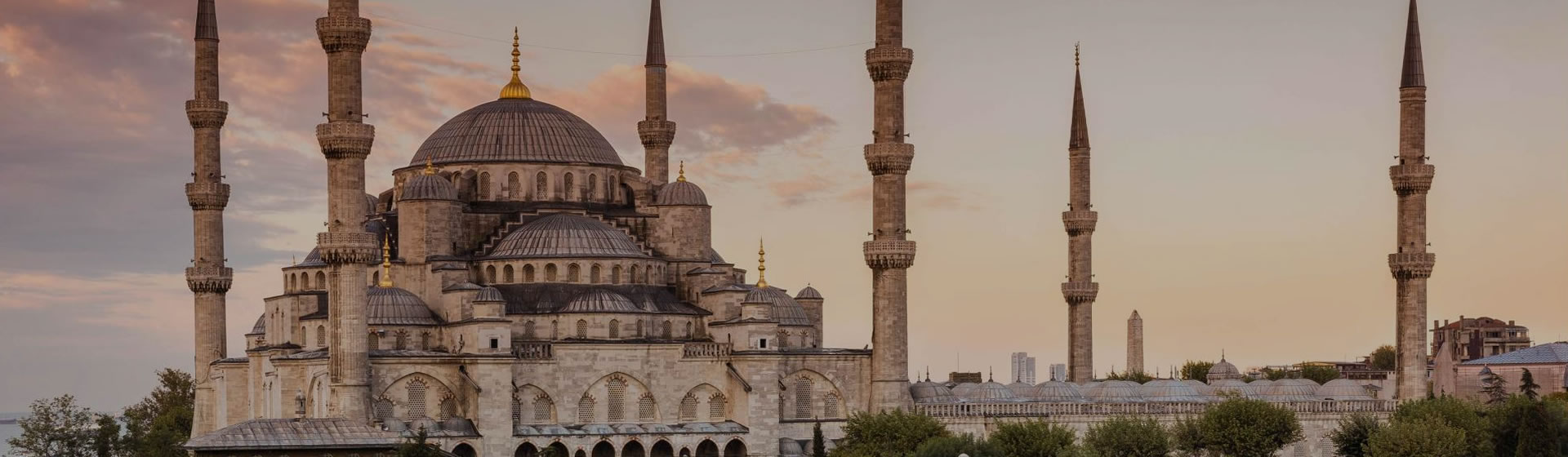

The Ottoman sultans saw themselves as successors to the Byzantine emperors, and in some ways they continued the tradition of Byzantine architecture.
Istanbul’s Ayasofya (Hagia Sophia, the Church of the Divine Wisdom) was the model on which Ottoman religious archtecture was built. Great architects such as Mimar Sinan studied the thousand-year-old church, learned its lessons and adapted them to the requirements of Islamic worship.
Islam forbids the depiction of “creatures with immortal souls” so as to avoid any temptation toward idolatry. This meant that Islamic architects could not fill their great mosques with portraits of saints, angels, cherubs or beasts mythical or actual.
Instead the Muslim masters used geometric designs, rich materials such as colored stone, exotic woods, gold and mother-of-pearl to make magnificence.
Although Ottoman architects designed homes, palaces, bridges, arsenals, drydocks and other important civil works, the great imperial mosques are their most impressive and enduring monuments.



 Best Travel Agencies
