



When Turkey is mentioned, Turkish Coffee is one of the main things that comes to your mind. Being much more than just a drink, Turkish Coffee is a great part of Turkey’s culture and history. As a well-known Turkish saying goes, “A cup of coffee has a memory of forty years,” meaning that it is worth forty years to drink a single cup of coffee with a beloved one. Even from this saying we can clearly feel how culturally significant Turkish Coffee is for society.

Have you ever had your fortune from a coffee cup? If not, it's high time you come to Turkey, and dive into the culture and history of the world-famous Turkish Coffee. If you are familiar with Turkey you also must be familiar with the inseparable dual of Turkish Coffee and Turkish Delight. If not, here is definitely a second reason to come to Turkey.
About Turkish Coffee
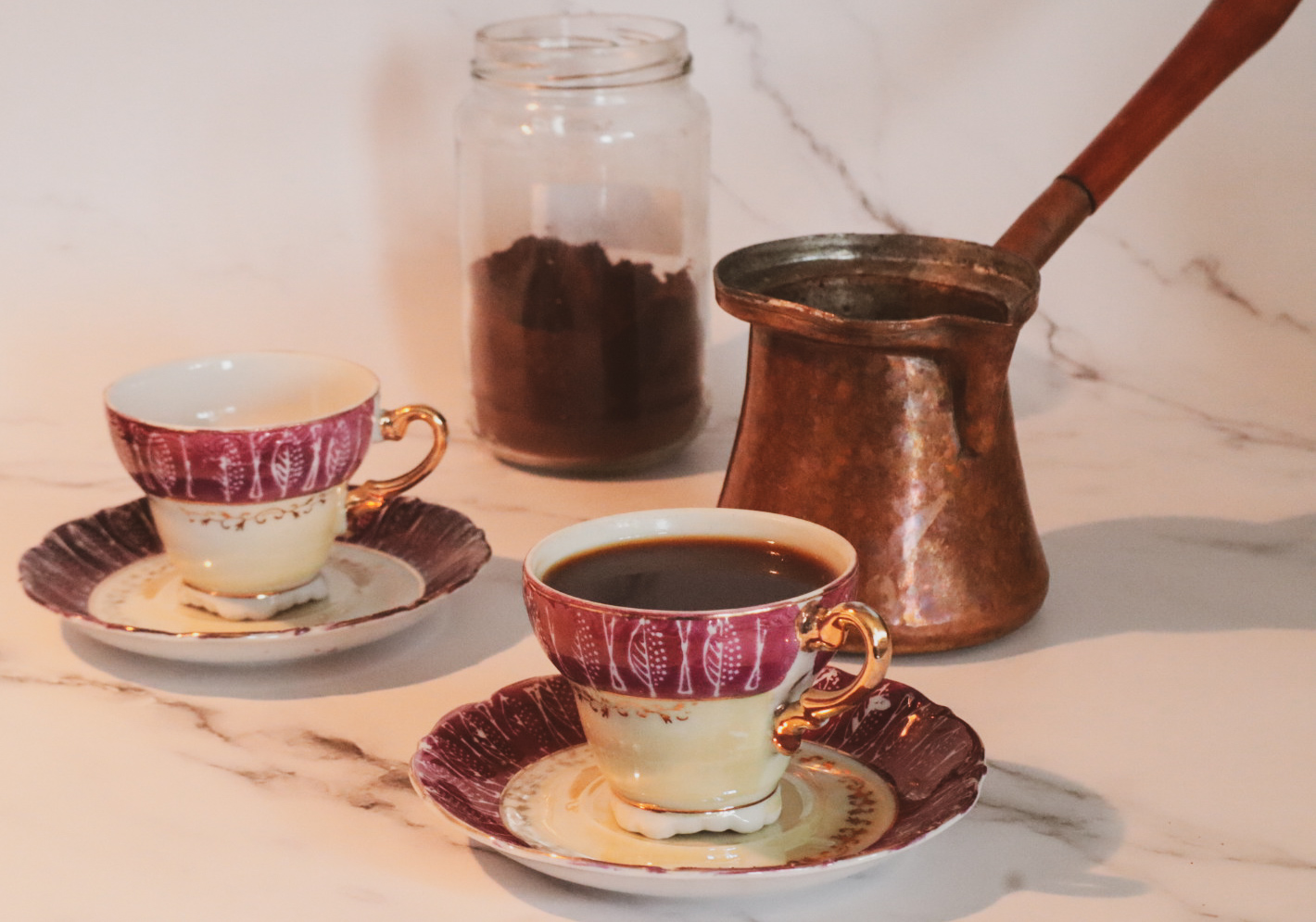
When it comes to special celebrations, family visits, or any kind of coming together, the first thing that comes to mind is undoubtedly Turkish Coffee. Not only is it about drinking the coffee, but the following tradition of reading fortune of the coffee cup is what makes it so special.
With its intense aroma, and strong taste, although not being everybody’s first go-to, Turkish coffee is one of the richest coffees in the world. It is actually a taste you have to get used to. So, if you don’t like it at the first try, don’t give up so quickly and give it a second try for sure.
Turkish coffee is usually served after breakfast or meal, as it helps with digestion. With its ideal size, it is the perfect go-to to cherish your meal with. The traditional way of serving Turkish coffee is with a piece of Turkish Lokum (delight) and a glass of water. Due to it strong taste, Turkish coffee needs something sweet to accompany it, and water afterwards to feel refreshed afterward. Some people like to have their Turkish coffee on the sweet side, so you can either order plain, or with more or less sugar.

Yummy Istanbul: Istanbul's #1 Loved Food Tours
Ready to taste the best of Istanbul? Yummy Istanbul has been running the city's top food tours since 2013. Their licensed local guides are true experts on Istanbul and Turkish cuisine, and they've earned over 2,000 five-star reviews. Book your Yummy Istanbul Food Tour today to create delicious, lasting memories!
How to order Turkish Coffee
Here’s how to order your Turkish Coffee when you’re in Turkey:
Sade – plain, no sugar (fairly bitter)
Az şekerli – with a little sugar (takes off the bitter edge; less than a teaspoon per cup)
Orta şekerli – with medium sugar (not too sweet; about a teaspoon of sugar for each cup)
Çok şekerli – with lots of sugar (quite sweet; two teaspoons of sugar or more)

History
With its history dating back to the Ottoman Period, Turkish coffee is much more than just being a coffee. Initially Turkish Coffee was only prepared and consumed in the Ottoman Palace by the Sultans and inhabitants of the palace. Later on, with its increasing popularity it started to be consumed by all people. Turkish coffee traditionally symbolizes intimate relations and significant moments, this is also why Turkish coffee is still mostly served when a friend, family, or anyone comes to visit. It is claimed that in the past, during the Ottoman period, the concubines in the harem used to make Turkish coffee when bored to chat and gossip by reading fortune from the coffee cup. Since then Turkish coffee and Fortune telling has turned into a tradition.
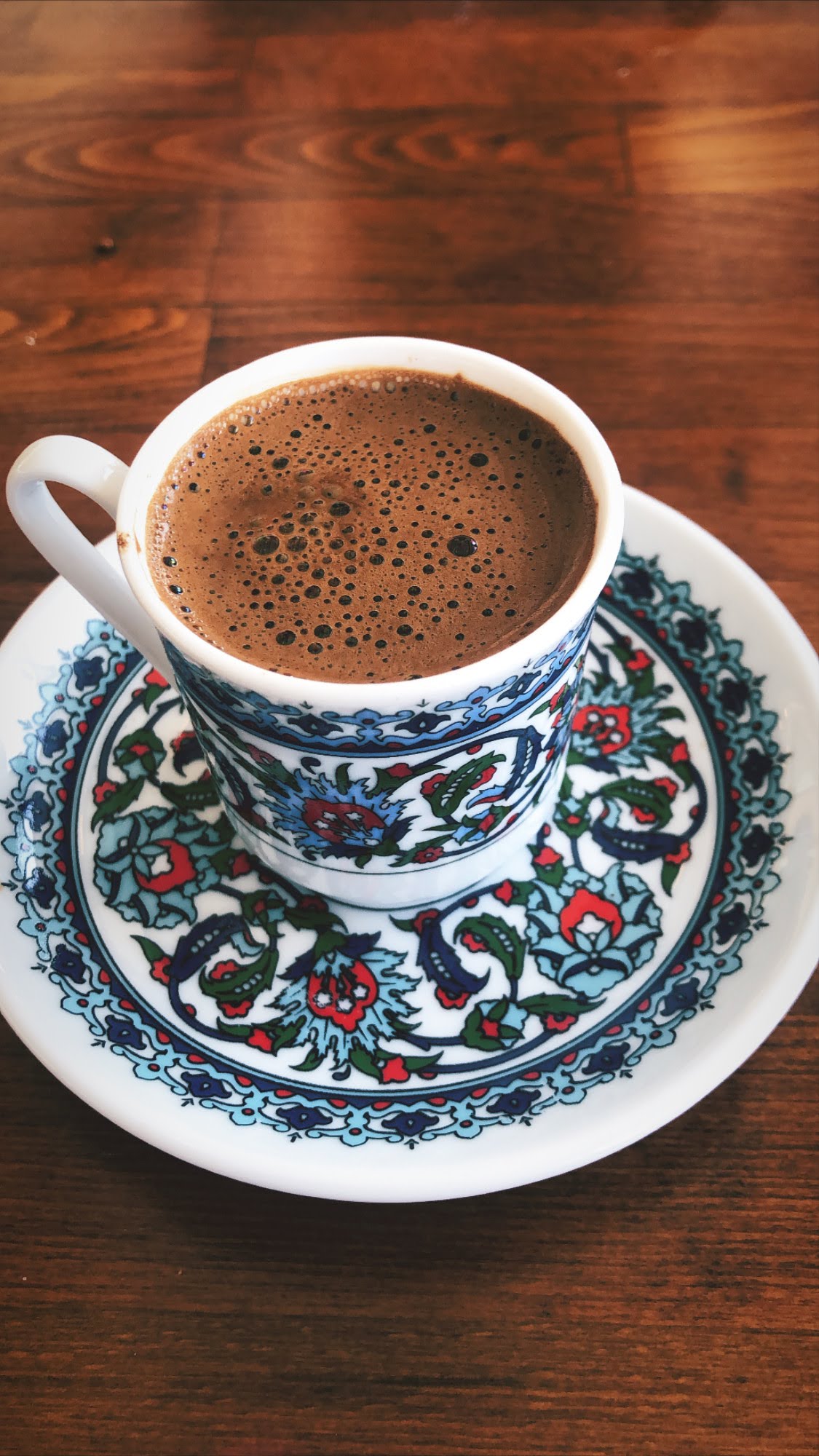
Fortune is told by the shapes created by the ground coffee which flowed down the sides of the cup. To be able to read fortune accurately, one needs to know how and from where the cup has to be looked at. Placing the handle opposite of you, the shapes on the left are interpreted as bad, while the shapes on the right as good. The shapes on the upper part of the cup are about the near future, while the shapes on the bottom are more about the far upcoming future. Now, as you learned how to read fortune from a coffee cup, you are ready to invite people over and start to tell some fortune. This is a tradition that never gets old, and always has a fun side to it.
Fortune Telling Tradition
Distinguishing itself from other types of coffees as being the only coffee served with its grounds, Turkish coffee is unique on its own. Due to being served in this form, once prepared it is not immediately consumed, enabling the grounds of the coffee to sink to the bottom before drinking. Usually people unfamiliar with Turkish coffee attempt to drink the whole coffee, with its grounds. However, those grounds are what is needed to read the fortune. Reading fortune from a coffee cup is very subjective, but still it is a fun activity to improvise and listen to.
Let's come to the main question, how is this fortune told? Once you finish drinking your coffee, leaving the grounds in the bottom, place the plate over the coffee cup, give it a gentle shake, and turn it upside down. This will enable the coffee grounds to slowly flow down the cup. The coffee cup is not supposed to be opened before cooled down. Sometimes a coin or metal ring is placed on top of it in order to cool it quicker off. Once cooled off, it is time to reveal the inside of the coffee cup.

How To Make Turkish Coffee
If you're wanting to try your hand at preparing a cup of Turkish coffee, watch our video above. here is our Turkish coffee recipe.
Ingredients
- Ground coffee (with finely ground coffee beans)
- Water
- Sugar (optional)
- Cezve (Turkish coffee pot)
Equipment
- Turkish Coffee cup
- Cezve (a special pot to make the coffee)
Instructions
Here’s how to make your own Turkish coffee, prepared at home:
Put the very finely ground coffee (about two teaspoons per coffee cup) into a cezve, a special pot with a wide bottom, narrower neck, and a long handle. Add sugar (optional) and a Turkish coffee cup (small cup) of cold water for each cup of coffee you’re making.
Place the pot over medium heat. To brew Turkish coffee properly, it needs to boil to the top two-three times. When the froth reaches the cezve‘s narrow neck, it’s a sign to remove the pot from the heat and let the froth recede before placing it back on the burner. Making Turkish coffee is a bit of an art, and if you're not careful, it can boil over.
After the third time the froth boils to the top, pour a bit of the froth into each cup. Bring the liquid left in the cezve to the froth-point once more, then pour it immediately, with the muddy grounds and all, into the Turkish coffee cups.
Wait at least a minute for the grounds to settle before you pick up the tiny cup and sip. Enjoy the rich, thick flavor. Don’t drink the whole coffee cup though; stop sipping when you taste the grounds coming through, leaving the “mud” or Turkish coffee grounds in the bottom of the cup.
Don't forget to serve Turkish coffee with a side of Turkish delight and water to take part in true Turkish coffee culture.
Different Types of Turkish Coffee
Turkish coffee is best in its original form, but there are also different sorts and flavored Turkish coffees.
Damla Sakızlı Kahve
“Damla Sakızlı” means “Gumdrop”, this type of Turkish coffee has a strong aroma of mastik gum, giving a nice freshness to the coffee.
Dibek Kahvesi
“Dibek Kahvesi” is a Turkish coffee mixture made of certain different ingredients. Being a bit on the sweeter side, it is thicker of consistency, made of Turkish coffee powder, carob, cocoa, terebinth, zahter, salep and cream.
Menengiç Kahvesi
“Menengiç” means “Terebinth”. This coffee is made of the dried and then ground fruit of the terebinth tree. Having a soft taste, it is good for your health, especially for those who have an intolerance for caffeine.
Fındıklı Türk Kahvesi
Turkish coffee is also made with certain aromas added to it, one of which is Hazelnut (fındık). People who find the original version too strong usually prefer these sorts of coffee. Fındıklı Türk Kahvesi has a strong flavor of hazelnut.
Kakuleli Türk Kahvesi
Another version of flavored Turkish coffee is with “Cardamom”. Having a strong aromatic flavor to it, this sort of Turkish coffee has a special and unique taste to it.
—by Julide Koca





 Best Travel Agencies
