


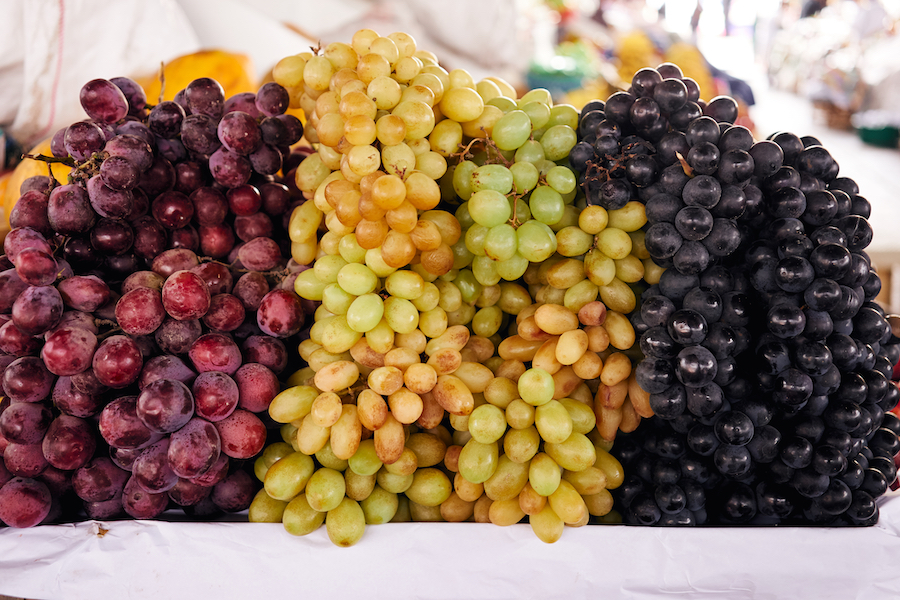
Notable grapes and wine have been widely produced in Turkey for millennia, and still are.. From its ancient roots (Turkey is argued to be the oldest region for winemaking!) to its modern day rejuvenation, Turkey is an undiscovered wine gem. You can explore Turkish wine on a wine tasting and vineyard tour.
Anatolia’s widely diverse climatic regions, from the Marmara, Aegean and Mediterranean Sea in the west, to Elazığ and Diyarbakır in the East and Southeast, to Cappadocia, Ankara, and Tokat in central Turkey, the land in Turkey is naturally suitable for producing unique local varietal wine grapes. Though many haven’t discovered Turkish wines, in spite of the fact that Turkey is the world’s 4th largest producer of grapes (because many are consumed as table grapes).

Turkey’s wine industry has developed In the past 100 years from mostly local indigenous grape varieties such as Öküzgözü (Ox-eye) from Elazığ and Boğazkere from Diyarbakır and Bornova Misketi near Izmir and ‘Kara’ type reds (Kalecik Karasi, Cal Karasi etc.) throughout the country, to now including many international varieties such as Cabernet Sauvignon, Sauvignon Blanc, Merlot, Syrah, Chardonnay. Here are some tips on choosing Turkish wines.
The standards were set for Turkish wines in the mid-1900s by the Kavaklıdere and Doluca (DOHL-oo-jah) vineyards. Simple table wines such as Kavak and the better Çankaya (white), Dikmen and the better Yakut (red), Lâl (rosé/blush) and Villa Doluca (white and red) are pleasant and not the most expensive.
In the 1990s, after changes in the laws governing alcoholic beverages, small local vintners began to make varietal wines of good quality. The best wines are often from the well-run vineyards of wealthy industrial and commercial families. Now nearly 300 wineries have opened throughout Turkey which make exceptional wines from both Turkish and International grape varieties. These wineries, most of which are open for wine tastings, are predominantly found in 2 areas - Thrace, west of Istanbul, and the south Aegean region around Ephesus.
In Thrace near Tekirdağ (which is west of Istanbul in Thrace; map), are numerous vineyards such as Barbare and Vino Dessera (I love their Cabernet Franc) taking advantage of the moderate climate, sandy soil, and abundant sunshine. But wineries continue west along the Canakkale Peninsula and include some real gems such as Asmadan / Bengodi. The wineries on Bozcaada ‘the Turkish Wine Island’ are also notable including Camlibag and Corvus.
Near Ephesus are numerous wineries such as Lucien Arkas, 7 Bilgeler, and more than 9 wineries around old Alacati / Urla on the Urla Wine Route.
In Cappadocia, the Kocabağ (KOH-jah-bah) and Turasan(TOO-rah-sahn) labels are two to try. I prefer the Kocabağ, especially their Öküzgözü and Cabernet Sauvignon reds.
OECD data shows per capita alcohol consumption in Turkey is around 1.5 liters per person per year notably less than say, Greece which consumes 3-4 times more per capita. But when you consider Turkey’s population of 80 million people is 8 times more than Greece’s 10 million, the annual consumption of 120 million liters by discerning Turkish wine-drinkers far exceeds the 40-60 million liters consumed in Greece.
Unfortunately, high taxes on alcoholic beverages means sipping wine with dinner is slightly expensive compared to the sometimes ridiculously inexpensive food prices.
At dinner in a famous Istanbul restaurant, main course plates were priced around $15, with the cheapest bottle of wine around $15, and others as high as $40. So food is inexpensive, but wines are similar to western prices per bottle.
Though table wines such as the red Kavaklidere Dikmen and basic Doluca labels sell for $8-10 in shops, and mid-priced Villa Doluca and Kavaklıdere’s Çankaya white for $10-15, Barbare Vineyard‘s premium wines and other upscale wines such as Kavaklidere’s red Yakut and Egeo wines, and Angora, Ancyra and Vinart appellation/vintage years can cost $20 or more in a shop, and 2-1/2 to 3 times as much in a restaurant.
Prices for imported wines can be even higher, although Chilean vintages sometimes compete with Turkish ones in price. The inexpensive wine you’re used to drinking at home may be a premium-priced wine in Turkey.
High taxes also play their part in the high price of wine. The tax just about doubles the cost of a bottle of inexpensive table wine. In part because of the high taxes, I’m told there is a large illegal, untaxed, and uncontrolled wine industry that competes unfairly with the legitimate vintners and may put the health of the wine-drinking public in danger.
Culturally, while Turkey is almost entirely a Muslim country, alcohol consumption is generally accepted and available most everywhere. Though during the holy month of Ramazan, alcoholic beverages are less in evidence, following traditional custom and out of respect.
—by Tom Brosnahan
– Revised August 2022 by Christopher Vannoy
Connect
If you want to learn more about wines in Turkey, consider booking a wine tour. I have also written a guide to help you choose a guided vs. a self-guided wine tour.
To find out more about the wine above, check out my over 300 recommendations at https://www.vivino.com/users/chris.vannoy/wines.
Visit my site: https://www.turkish-wine.com/


 Wine Tour Pricing
