

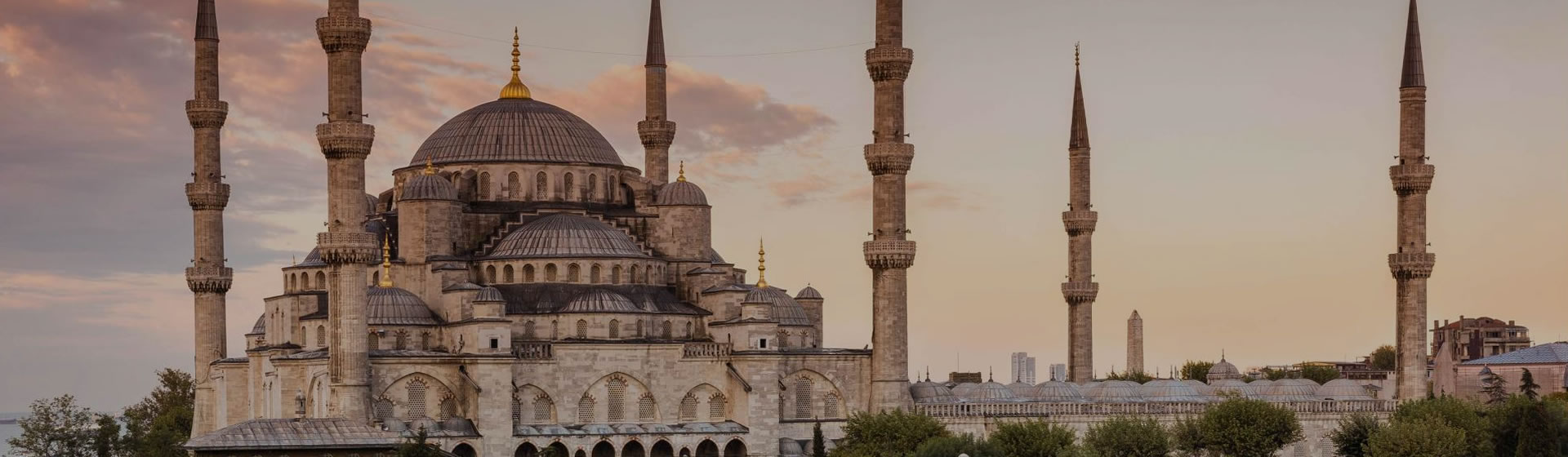

Constantinople was founded by Emperor Constantine the Great in 333 AD as the “New Rome,” but after the sack of the old Rome in 410 it became the Only Rome (so far as the emperor was concerned). The capital of the Roman Empire was now on the Bosphorus.
Though most of western Europe—formerly the heartland of the empire—had fallen to “barbarian” peoples such as the Visigoths and Vandals, the eastern territories, Emperor Justinian (527-565AD), a great general and statesman, preserved and expanded the empire’s power to include Greece and the Balkans, Anatolia, Syria, Palestine, Egypt, eastern North Africa, and even parts of Italy.
Today people remember Justinian for Constantinople’s grandest building, the great Church of the Holy Wisdom, or Hagia Sophia (Ayasofya). Finished in 537, it reigned as the greatest church in Christendom for almost a thousand years.
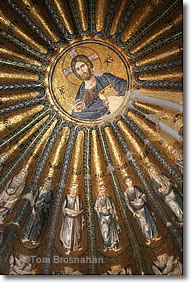 |
| Byzantine mosaics in the Chora Church, Istanbul... |
Able emperors reigned at times through the centuries after Justinian, but they were not great enough to keep the empire from decline.
In the 11th century the Seljuk Turksinvaded Anatoliafrom the east and built a powerful empire in central and eastern Anatolia, once the Byzantine heartland.
The Crusader armies of Europe marched through in the 12th and 13th centuries, doing battle with the Seljuks as well as threatening—and in 1204 even attacking, conquering and sacking—Constantinople.
By the late 1200s, Byzantine power was much reduced in Anatolia, and Turkish warlords on its eastern borders around Nicaea (Iznik) and Sögüt had become serious threats. One of these warlord principalities, founded by a chieftain named Osman, grew into the Ottoman Empire which in 1453 conquered the imperial capital of Constantinople (Istanbul) and soon thereafter swept away the last vestiges of Byzantine rule.
| History of Turkey |




 Best Travel Agencies
