

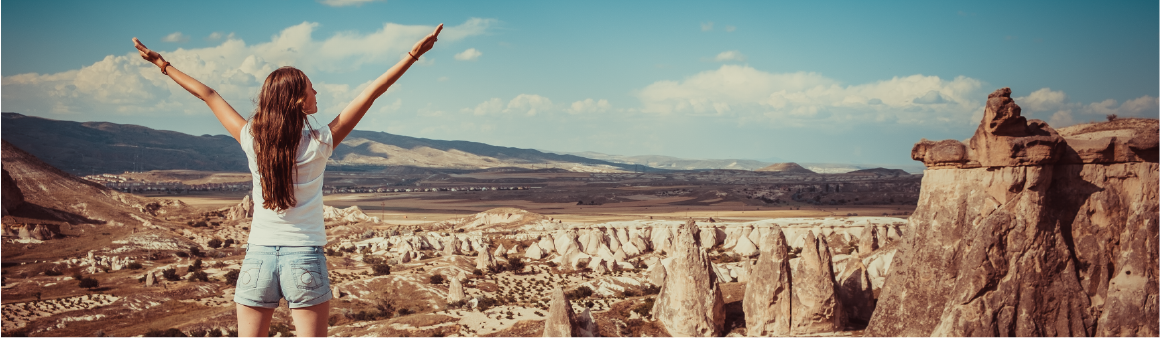

Underground cities in Cappadocia, Turkey? Surely they're joking, I thought to myself when I first heard of them. No joke!
I had no idea these subterranean towns extended seven and eight levels into the earth, carved from the soft volcanic stone. When I finally explored them, I felt as though I was wandering through a gigantic sponge.
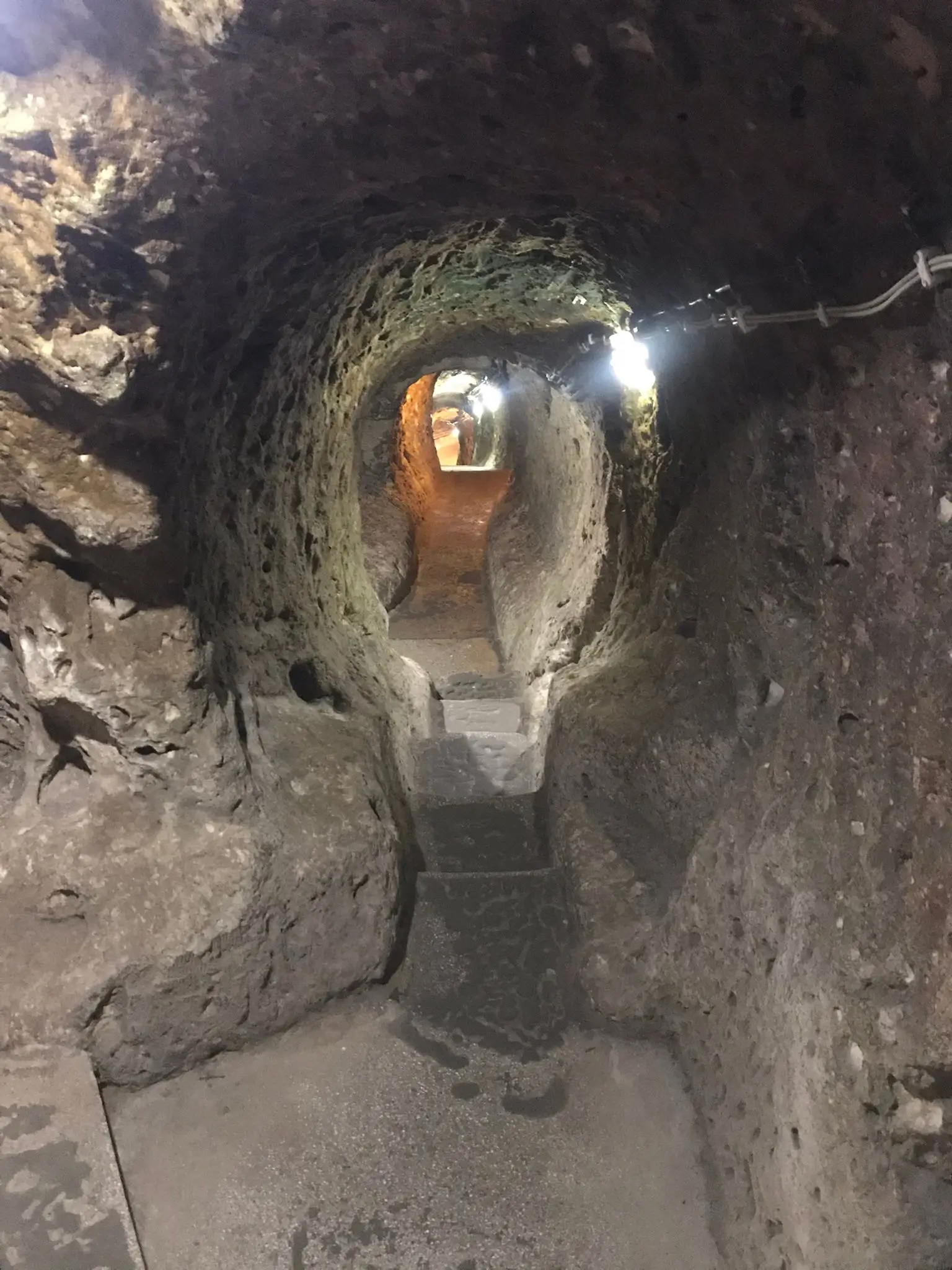
There are underground cities at Özkonak, Mazıköyand several other places, but the most dramatic and interesting ones now open to visitors are the ones south of Nevşehir at Kaymaklı and Derinkuyu, 20 km (12 miles) and 30 km (19 miles) south of Nevşehir, respectively (map).
In 2014, a gigantic underground city, said to dwarf all others known, was discovered beneath Nevşehir's hilltop fortress in the city center. The area, once marked for residential development, now has protected archeological status. Explorations of this find are continuing, but it will be some years before this discovery is opened to visitors.
You can make a day-trip excursion from Ürgüp, Göreme, Avanos, or Uçhisar, that includes an Underground City, the hill town of Güzelyurt, a hike to see the Byzantine cave chapels in the Ihlara Valley, and the medieval Ağzıkarahan Seljuk Turkish caravanserai(map). Here's how.
When visiting a Cappadocian Underground City, try to get to the cave entrance right when it opens (usually 09:00 am) so as to avoid the bus-tour crowds that appear by mid-morning.
These troglodyte cave-cities were excavated as early as Hittite times, and expanded over the centuries as various marauding armies traversed Central Anatolia in search of captives and plunder.
Stout rolling-stone doors prevented invaders from entering. Deep wells provided water, and tall chimneys provided ventilation.
Wine presses, oil storage, livestock pens, cooking places, and even elaborate churches were carved out of the rock so that the inhabitants could live for weeks or months underground until it was safe to emerge and return to their ground-level villages.
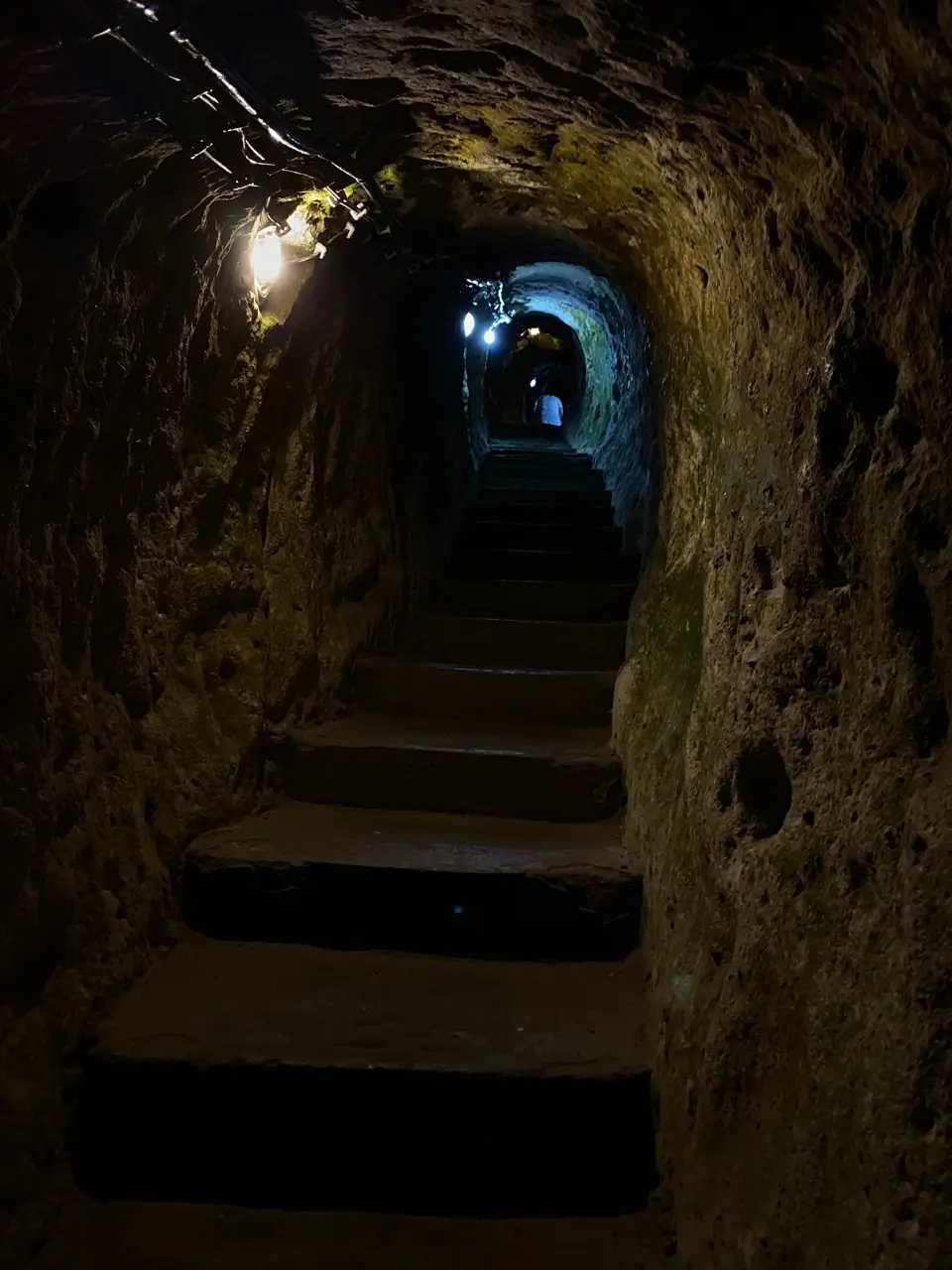
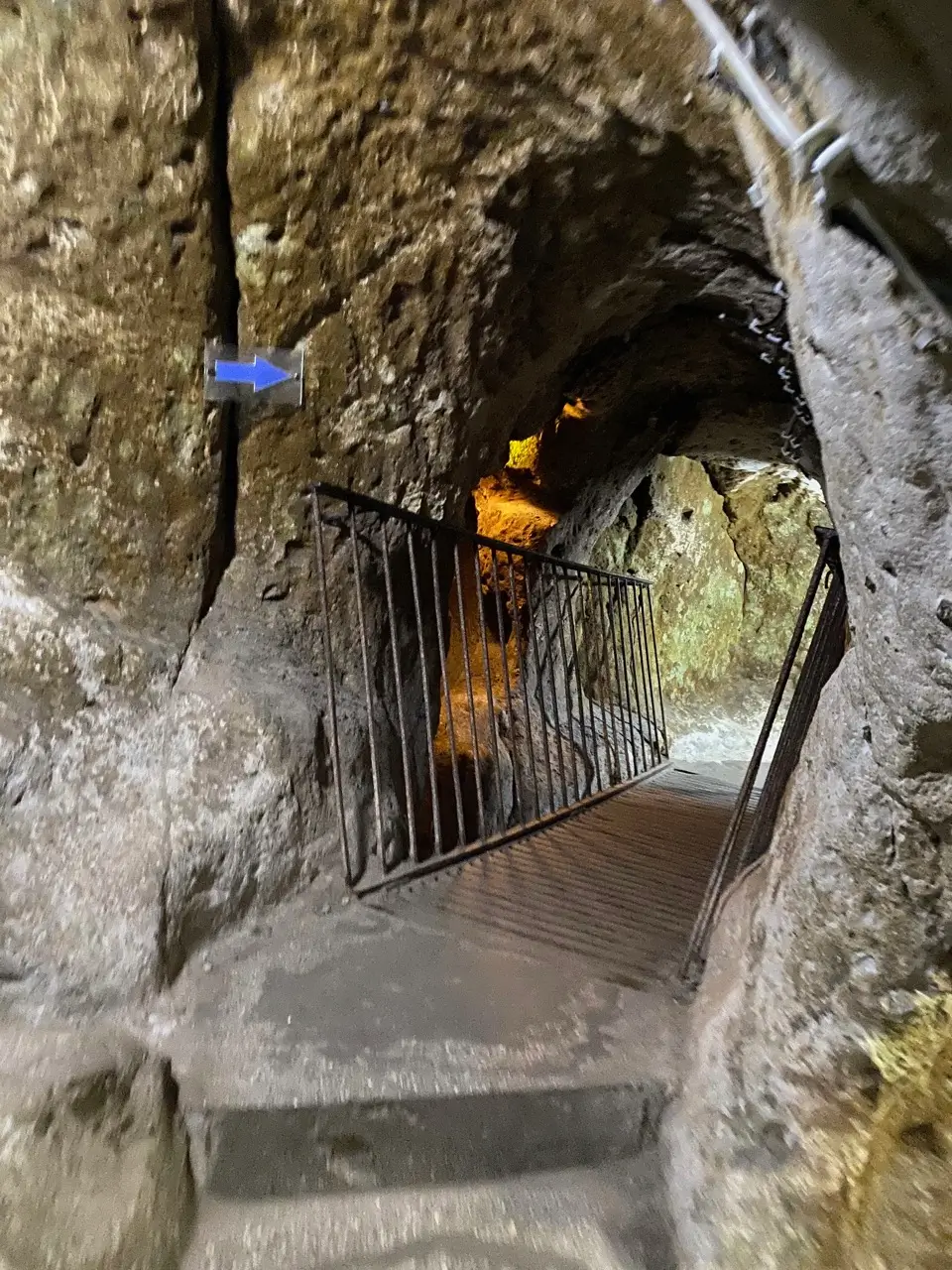
At Kaymaklı and Derinkuyu, you follow a marked, lighted path through the labyrinth. The self-guided tour may take between 15 and 30 minutes, depending on your speed and interest.
The temperature below-ground is a uniform 13°C (55°F), so if you're sensitive to cold, you may want to bring a wrap.
The walking surface is uneven, but not extremely so.
The height of the passageways and chambers is often around 170 centimeters (about 5.5 feet), sometimes higher, but unless you are very short, you will have to duck your head in some places, and bend well over in others. Most dangerous pitfalls are covered and secured, and tunnels you shouldn't take are blocked.
There are no services (toilets, drinking water, communications, etc.) underground.
Distances & Travel Times (to Kaymakli)
Aksaray: 135 km (84 miles) W, 2.5 hours
Avanos: 27 km (17 miles) NE, 50 minutes
Göreme:20 km (12 miles) N, 25 minutes
Güzelyurt:76 km (47 miles) W, 1.5 hours
—by Tom Brosnahan

 Find Private Guide
