

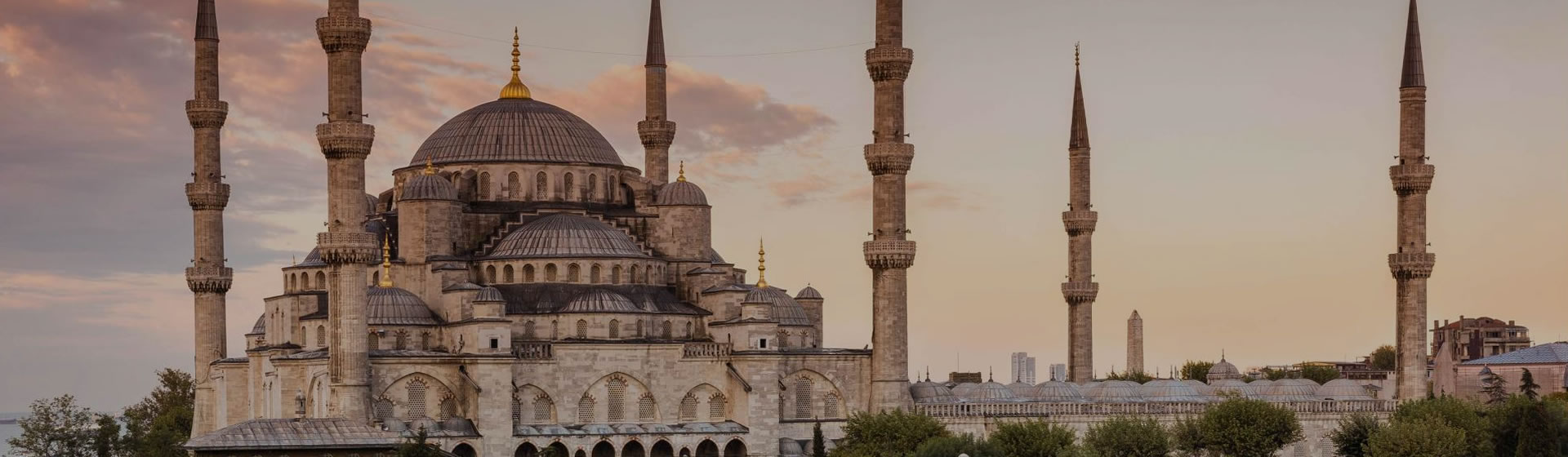

Walking along Divan Yolu from Sultanahmet to Beyazıt Square and the Grand Bazaar, you come to Çemberlitaş ('stone with hoops'), a tall, obviously very old and dismal-looking porphyry column (map).
It was erected on May 11, 330 by Constantine the Great to celebrate the designation of Constantinople as the new capital of the Roman Empire.
The column was the centerpiece in the Forum of Constantine, a grand colonnaded plazawhich may have resembled the one designed by Bernini and built in front of St Peter's basilica in Rome. Statues of pagan gods and Christian saints decorated the forum.
Atop the column was a gigantic statue of the Emperor Constantine dressed and adorned as Apollo. The statue toppled in a hurricane in 1106 and was later replaced by a huge cross. After the Ottoman conquest the cross was removed.

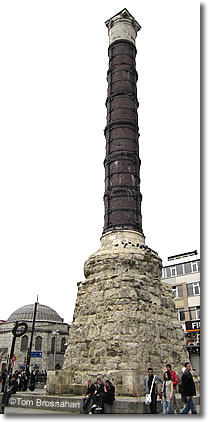
Istanbul's Burnt Column: a relic from the founding of Constantinople in 330 AD.
In 1779 a conflagration destroyed this whole neighborhood and left the column with black scorch marks, earning it the nickname 'Burnt Column.' Sultan Abdülhamit I had the column restored after the fire, and added the present masonry base.
Its iron hoops were replaced in the 1970s, and extensive stabilization was carried out from 2004 through 2009 to keep it upright for a few more centuries (19 and counting).
The Çemberlitaş Hamamı, one of Istanbul's most popular Turkish baths (hamam), is right next to the Çemberlitaş (map).
—by Tom Brosnahan
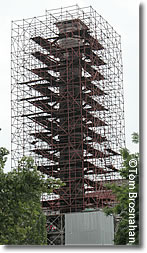
Restoration (2004)


 Free Trip Planner
