


Beyoğlu's ornate Çiçek Pasajı (Flower Passage) on İstiklal Caddesi at Galatasaray Square is filled with restaurants. Each evening, the tables are filled with Turks and foreigners who come to talk, eat, laugh, and linger over dozens of plates of meze, succulent kebabs, seafood, sweet desserts, and glass after glass of milky Turkish rakı, beer, or wine. The Pasaj is a shrine to Turks' love of long, congenial group dinners, but...the Pasaj has no flowers. So why the name?
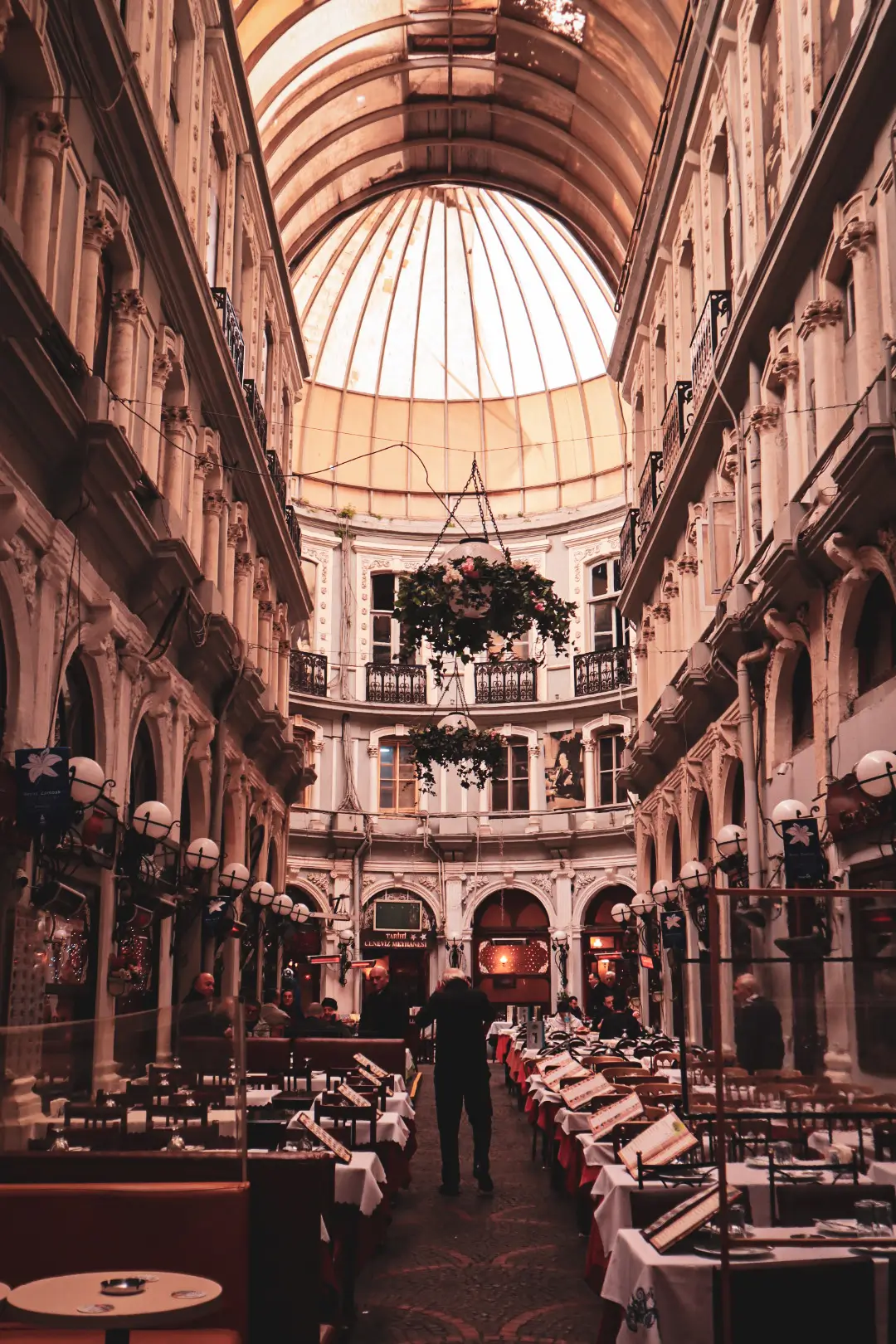
The Çiçek Pasajı is the L-shaped courtyard of a building named Cité de Péra, one of the first European-style buildings constructed during the Ottoman Empire's late-19th-century effort to modernize. In its 19th- and early 20th-century heyday, the Cité de Péra building housed posh shops on its ground floor in the Pasaj, and offices on the floors above.
By the time I arrived in 1968, the Pasaj had become a bunch of workmen's meyhanes (tavernas) serving cheap but good food and strong drink. The shops were by then all simple restaurants. Beer barrels were rolled out into the Pasaj, square slabs of marble placed atop them, low three-legged stools set around, and Istanbul's taxi drivers, craftsmen, and minor merchants came to eat, talk, shout, sing, and sometimes drink a bit too much.
It was a jolly place, with itinerant musicians, vendors, circulating freely—and getting lots of business. Then, in the late 1980s, about a century after it was built, part of the Cité de Péra collapsed. The building was closed. When Turkey's tourism boom arrived in the 1980s and 1990s, the building was restored, renovated, and re-opened as a more upscale eating-and-drinking locale for a somewhat richer class of patrons. The patchwork of tarps sheltering the courtyard from the elements was replaced with a modern canopy.
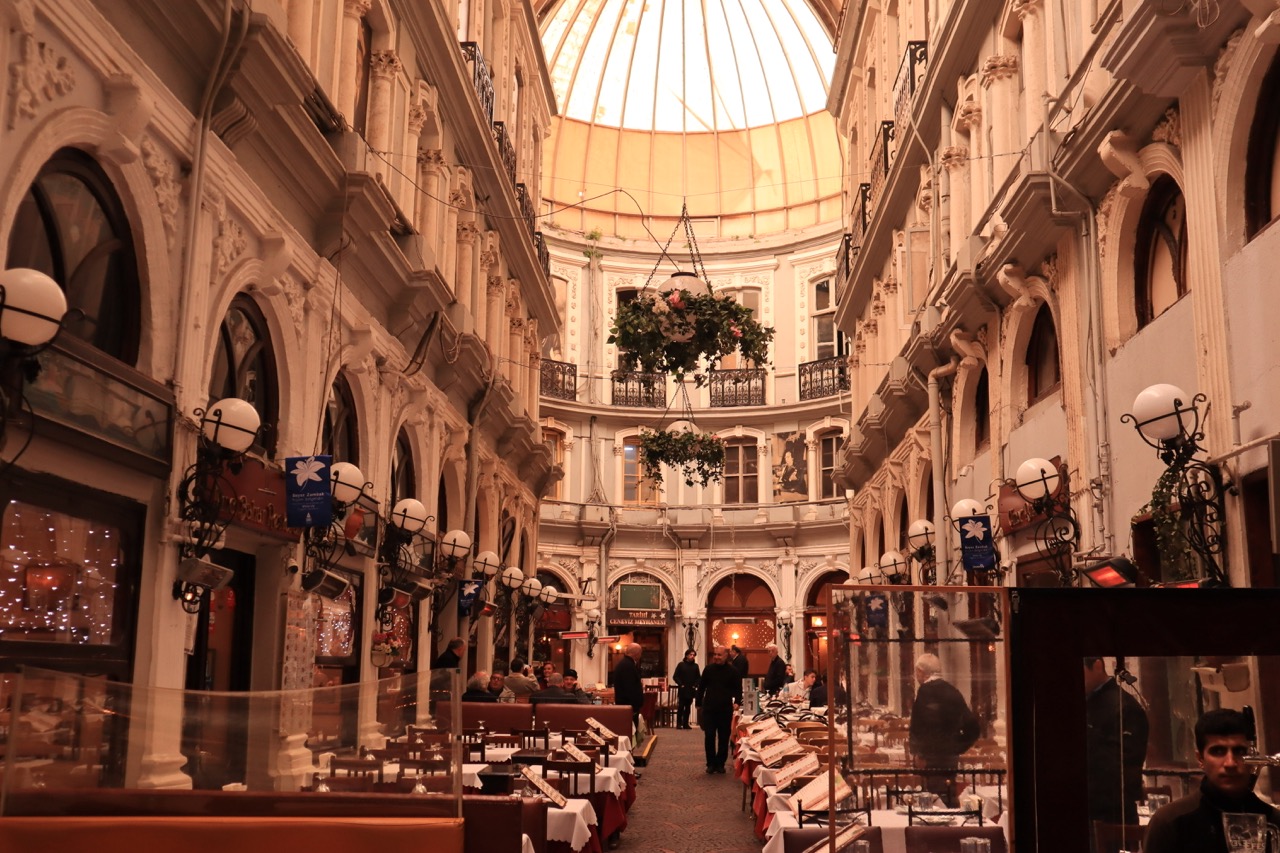
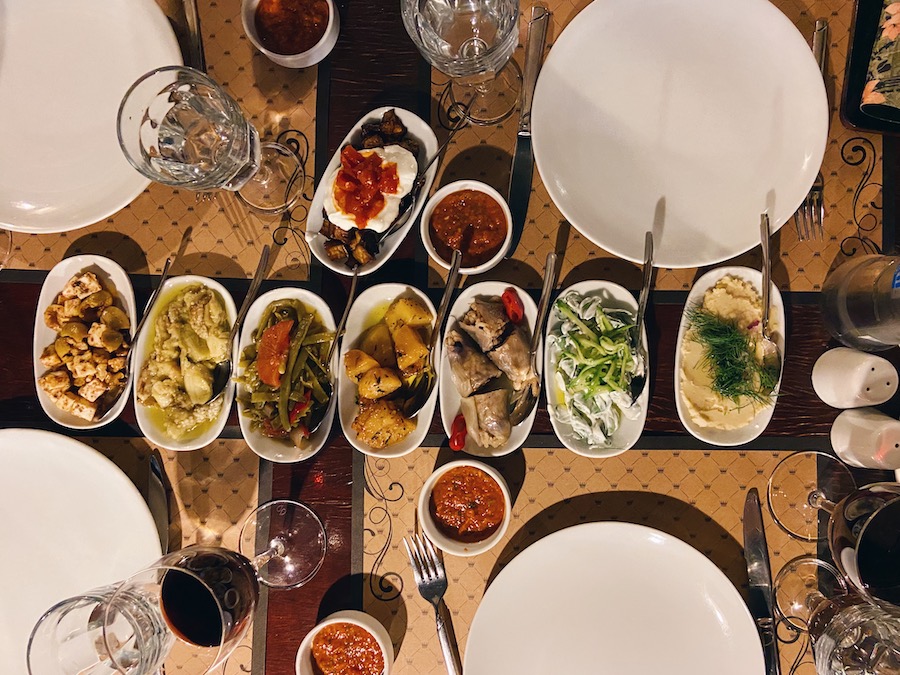
A dinner at one of the restaurants in the Çiçek Pasajı is now noticeably more sedate, refined, and expensive than when I first dined there over four decades ago. Where did all the rowdies go?
Around the corner and up the street (Sahne Sokak) past the Armenian Church of the Three Altars (Üç Horan Kilisesi) to Nevizade Sokak, a narrow street lined with little restaurants. In good weather, Nevizade Sokak is filled with tables, chairs, waiters, and diners. The jolly atmosphere of the old Çiçek Pasajı reigns, with several updates.
But wait a minute—what about the flowers?
When I first saw it, the Pasaj had no flower shops, but neighboring Sahne Sokak had several. But according to a TTP user who served as a Marine guard at the American Consulate-General in the Palazzo Corpi nearby on Meşrutiyet Caddesi, in the late 1950s, most of the shops in the Pasaj sold flowers, and only a few were restaurants.
"It's good to know you were able to dine off a slab of marble," he wrote. "All we were offered was a square of plywood."
Even more surprising is this: "I visited it [in 2002] and even met a waiter who befriended us Yanks way back then and actually remembered me from 1958."
—by Tom Brosnahan


 Get a Quote
