Taksim Square, nestled in the heart of Istanbul, is a vibrant nexus where history, culture, and modernity converge. As the gateway to the bustling İstiklal Caddesi, it serves as a dynamic stage where the city's pulse can be felt most vividly. From the echoes of the past resonating from the grand Taksim Mosque to the artistic performances at the iconic Atatürk Cultural Center, Taksim Square is a testament to Istanbul's rich tapestry of experiences. The square's energy is amplified by the thrum of life along Independence Avenue, a lively avenue that offers a kaleidoscope of sights, sounds, and tastes. Whether you're a history enthusiast, a culture vulture, or a modern-day explorer, Taksim Square is a microcosm of Istanbul's spirit, waiting to be discovered.

Location of Istanbul Taksim Square
Taksim Square, at the northeastern end of İstiklal Caddesi in Beyoğlu (map), is the heart of modern Istanbul, laid out in the late 1800s near a taksim (branching-point) in the city's water distribution system. You can still see the Ottoman taksim at the beginning of İstiklal Caddesi.
Cumhuriyet Caddesi (Republic Avenue) goes north from the square along the west side of Gezi Park to the upscale districts of Elmadağ, Harbiye, Nişantaşı, and Şişli.
To the west, across Cumhuriyet Caddesi from Taksim Gezi Park was the Ottoman barracks' parade ground, called the Talimhane. After World War II, this large, flat, open area was developed with a grid of streets, and more recently has seen the construction of more than a dozen medium-size 4-star hotels.
Nearby Sights
The area surrounding Taksim Square is home to a variety of notable landmarks and points of interest. Keep reading for an overview of these key locations, including historic monuments, cultural centers, parks, restaurants, and prominent streets. Each offers unique insights into Istanbul's rich history and vibrant culture.

Istiklal Street
İstiklal Caddesi, formerly the Grande Rue de Péra, starts in Taksim Square by the Independence Monument and extends southwestward to Galatasaray Square and Tünel Square.
From Taksim Square, you can walk all the way down İstiklal Caddesi to Tünel Square in a half hour or less. If you want to experience the authentic vibe of old Istanbul, you can ride the Nostalgic Tram, which will bring you from the starting point of Istiklal to Tünel Square.

Independence Monument
Independence Monument (İstiklal Anıtı) in the circle at the southern end of the square commemorates the Turkish Republic's founder, Kemal Atatürk, in both his roles, as military commander-in-chief and as a statesman.
Designed by Pietro Canonica, it was erected in 1928, defying the Islamic prohibition of effigies of living beings. (Canonica was also the sculptor of two Atatürk monuments in Ankara and the equestrian statue of Atatürk in Izmir's Republic Square.)

Taksim Gezi Park
Taksim Gezi Park, to the north, is what replaced a huge Ottoman artillery barracks, demolished in 1940.
This park is known as the Protest Park, due to the incidents that happened on May 28, 2013. A group of people started to protest against a project which intended to replace the park with a shopping mall. Being one of Istanbul's very few open green spaces, people from all around Istanbul set up camps in the park to protest.
Atatürk Kültür Merkezi AKM (Atatürk Cultural Center)
Positioned on the western flank of Taksim Square, you'll find the Atatürk Cultural Center. Originally built in 1969, it was the fourth-largest Cultural Center globally at the time. In 2008, the Center underwent a significant restoration and reopened thirteen years later, on October 29, 2021. Today, it serves as a venue for opera, ballet, theater, and concerts, and also boasts an impressive library and inviting cafes within its premises.
Taksim Camii (Mosque)
Situated on the eastern edge of Taksim Square, the grand Taksim Mosque is a sight you can't overlook. Construction began in 2017 and, after four years, the Mosque was completed and opened to the public in 2021.
This impressive three-story structure spans a total area of 2,482 square meters. Additionally, the basement level houses an exhibition hall, a library, and dining space.
How To Get to Taksim Square
Taksim is conveniently accessible due to its well-connected transportation network. Here are some options:
- Metro (M4): The most straightforward route to Taksim is via the Metro (M4), which runs between Yenikapı and Hacıosman. Alighting at Taksim Metro Station places you directly in the heart of Taksim Square. From here, Istiklal Street is a short walk away, leading you into one of Istanbul's most bustling areas.
- Şişhane Station: An alternative is to disembark at Şişhane Station and take a leisurely walk up Istiklal Street. This journey will bring you to the Square in about 20-30 minutes, depending on your walking speed. If you'd rather not walk the entire distance, the Nostalgic tram is available for your convenience.
- Funicular: If you're coming from the Karaköy district, the Funicular line is a practical choice. It ascends to the end of Istiklal Street, from where you can walk up Istiklal until you reach Taksim Square.
Pro Tip: My personal recommendation is to take the metro and alight at Taksim station. This route allows you to explore Istiklal Street, the Beyoğlu district, and Galata Tower, and eventually arrive at Karaköy, situated by the Golden Horn, all within walking distance.

Taksim Square Hotels
One long block north of the square in Elmadağ are three of the city's best luxury hotels near Taksim Square: the Divan Oteli, Ceylan InterContinental, and Hyatt Regency Istanbul.
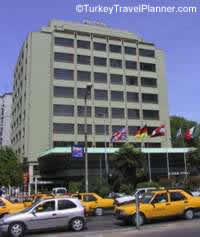
The Hilton Istanbul is a few blocks farther north and an excellent option if you are searching for a Taskim Square Hotel. The Marmara Hotel Taksim is right in Taksim Square itself.

Conclusion
Taksim Square and İstiklal Caddesi together form the vibrant core of Istanbul, offering a unique blend of history, culture, and modernity. Whether strolling down the bustling İstiklal Caddesi, soaking in the atmosphere at Taksim Gezi Park, or immersing in performances at the Atatürk Cultural Center, there's always something to captivate.
With a well-connected transportation network and a range of accommodations to suit all budgets, this dynamic district is a must-visit destination for any traveler to Istanbul. Embark on your journey to explore the vibrant life and soul of Istanbul today!


 Get a Quote