



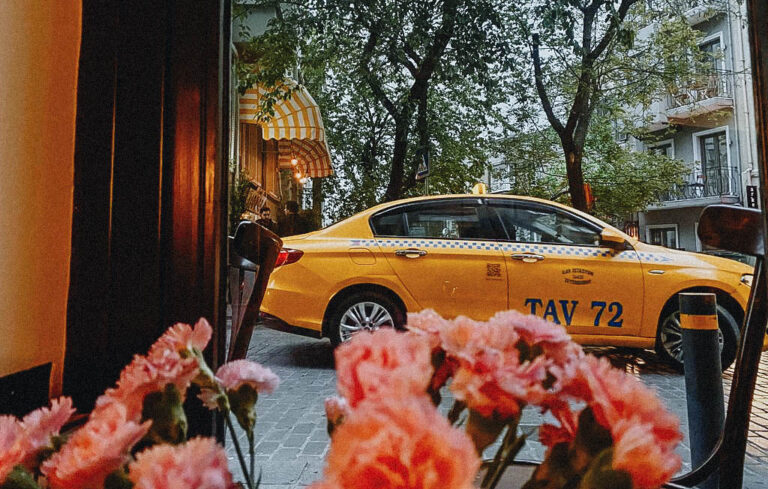
Taxis in Istanbul & Turkey: A Comprehensive Guide
Navigating through Turkey, especially in the bustling city of Istanbul, can be quite an adventure, with taxis being a commonly used mode of transportation. Whether you're a first-time visitor or a seasoned traveler, understanding how taxis work in this beautiful country can help you enjoy a hassle-free trip.
How Taxis Operate in Turkey
All taxis in Turkey operate on a taximeter system that starts counting as soon as you enter the vehicle. To avoid any misunderstandings, it's important to ensure that the taximeter is reset to the base fare before you embark on your journey. The fare is determined by the distance traveled and the duration of the trip, taking into account traffic conditions.
However, there's an exception when it comes to inter-city trips. These usually operate on a set fee, which is typically posted or printed somewhere in the taxi. This rule often ends up being cheaper than the taximeter system.

Cost of Taxis in Istanbul
In understanding the cost of taxis in Istanbul, it's crucial to remember that prices can fluctuate due to a variety of factors, such as the time of day, traffic conditions, and the specific location within the city. Therefore, the prices we provide here should be taken as estimates based on the standard rates as of 2023.
The base fare for any taxi ride in Istanbul starts at ₺12.65. This is the minimum cost you will pay, and it begins to increment with each kilometer traveled. The fee per kilometer is set at ₺8.51, which will be added to the base fare as you move towards your destination.
For journeys that take a considerable amount of time due to traffic jams or longer distances, there is also a timetable fee. This is set at ₺100.80 per hour and applies when the taxi is in motion and when it's idling in traffic. This is a standard practice in Istanbul to account for the time spent by the taxi driver.
Short-distance journeys have a minimum charge of ₺40. This is irrespective of the actual distance traveled.
If your route involves crossing any of the toll bridges in Istanbul, an extra charge of ₺8.25 is added to your fare.
For longer journeys, such as those between cities or from the city to airports or resort towns, the taxi fare might operate on a set rate system. These rates are usually fixed for specific distances, such as 10-20 kilometers (6 to 12 miles), or more. If a set rate has not been established for your intended journey, it's common to negotiate an agreeable rate with the driver before commencing the trip. This ensures that both you and the driver have a clear understanding of the expected cost, thus avoiding any potential disputes or misunderstandings.
Taxis from Istanbul Airport to the City Center
Once you exit the terminal at Istanbul Airport, you'll find a well-organized taxi rank with each category of taxi clearly marked.
The luxury black taxis typically offer premium services, such as leather seats, free WiFi, air conditioning, charging ports for your devices, and additional space for luggage. These taxis may be Mercedes-Benz or similar luxury vehicles, ensuring passengers a smooth and comfortable ride to the city center. However, this comfort comes at a premium, with fares being approximately 70% higher.
Turquoise taxis are a mid-range option. They are generally newer model cars that offer a balance between comfort and cost. Although not as luxurious as the black taxis, they still provide a clean, safe, and comfortable ride. With fares about 15% higher than the base fare, they offer good value for money, especially if you're traveling with a small group or have additional luggage.
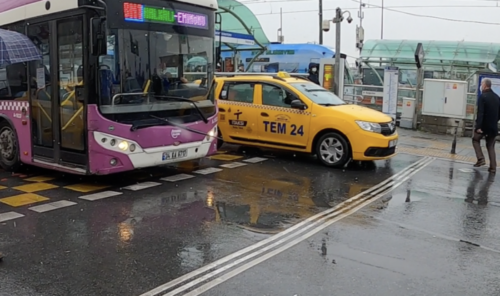
Yellow taxis are the most economical option, ideal for budget travelers. These taxis provide basic comfort and are a popular choice for those looking to save money. Despite being the most cost-effective, they still maintain a standard level of safety and cleanliness.
It's worth noting that traffic in Istanbul can be heavy, especially during peak hours, which can significantly impact the total fare. Therefore, if you're traveling on a budget or during rush hour, you might want to consider public transportation options such as the Istanbul Metro or Havaist airport shuttle services. In some situations, a useful, cheaper alternative to the taxi is the local bus (shared taxi or bus).
Taxi Fares in Turkey
Remember that every city in Turkey has different fees for their taxi systems. As examples, the current taxi prices in Antalya are as follows: the opening fee is ₺10, the price per kilometer is ₺14, and the minimum charge is ₺40. In Bursa, the opening fee is ₺12.65, the price per kilometer is ₺9 and the minimum charge is ₺25. In Ankara, the minimum charge is ₺10, the price per kilometer is ₺8 and the minimum charge is ₺25. In Izmir, the opening fee is ₺7, the price per kilometer is ₺13 and the minimum charge is ₺30.
In most taxis, you can pay by credit card, but it would be better to ask the driver first if it is applicable in that taxi or not. Also, it should be noted that the prices will be a little higher when you use a credit card to pay because of the commissions paid.

Tipping in Taxis in Turkey
In Turkey, it's customary for locals to not tip taxi drivers but rather to round up the fare. For example, if the fare totals ₺50.75, a local would typically round this up and pay ₺51.
As a visitor to Turkey, your taxi driver might expect a tip from you. However, tipping isn't obligatory unless the driver has provided an extra service, such as assisting with an abundance of heavy luggage. You can simply follow the local custom of rounding up the fare.
Avoiding & Resolving Issues
Tourists in Istanbul occasionally find themselves paying more for taxi rides due to indirect routes taken by drivers. To prevent taxi scams, you can use a GPS application like Google Maps or Yandex to input your destination. By doing so, you can ensure that you are on the most direct route, which should align with the fare displayed on the taximeter.
Keep in mind that Istanbul is known for its heavy traffic. This could mean that your journey takes longer than expected, and as a result, the fare may be higher than you initially anticipated.
For future reference and to avoid potential issues, such as leaving an item behind in the taxi or having a grievance about the driver or the ride, it's a good idea to make a note of the taxi's license plate before your journey begins.
If you encounter any issues or an unpleasant experience, like the driver refusing your ride, you can report this to the local authorities. The hotline for such complaints is 153, which connects you to the Istanbul Metropolitan Municipality's public service line, known as the IBB White Table (Beyaz Masa).
Taxi Applications in Turkey
In Turkey, especially in Istanbul, you’ll need to get a taxi from the street by raising your hand and calling “Taxi!”. However, there’s an easier way.
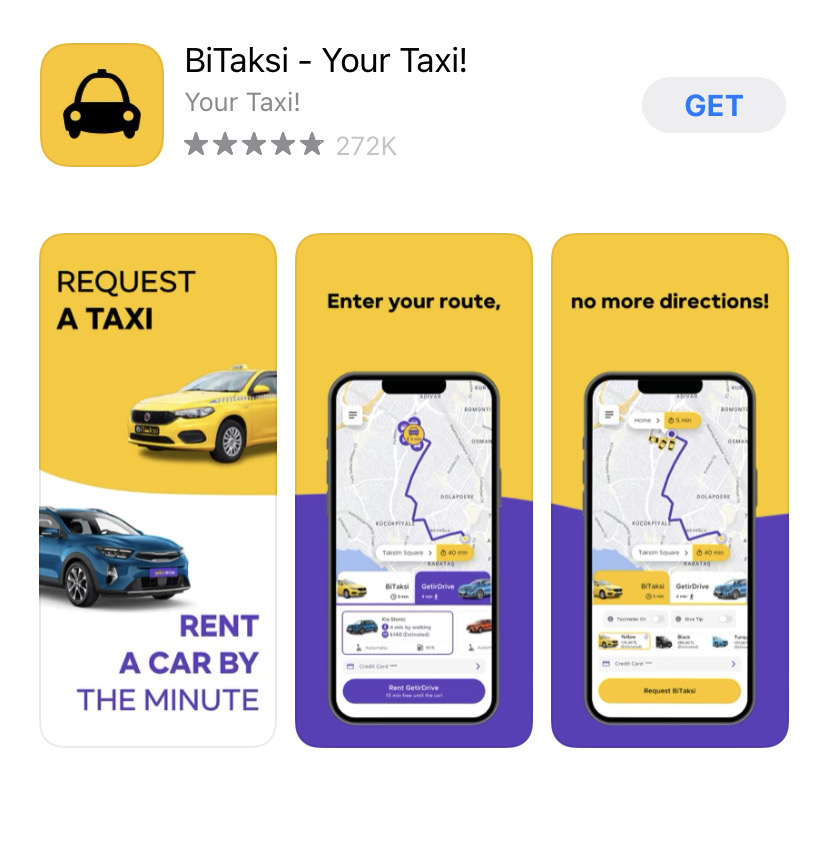
You can use certain applications such as the Bitaksi app. You can download it to your phone and select where you want to go. A driver will accept your request and come to pick you up from your location. The driver will mostly call you to let you know they are coming in a few minutes. This way, you also won’t be asked to pay more money because you can see how the fare in advance. There are some other applications such as iTaksi, Taksim, Getir Taxi, among others.
Private Transfers
Opting for a private transfer in Istanbul is an excellent choice for those seeking a more personalized, comfortable, and hassle-free travel experience. Private transfer services are available from both airports and can take you directly to your hotel, eliminating the need to navigate through the city's bustling streets and public transportation.
These services usually offer a range of vehicle options, from standard cars to luxury sedans, catering to different needs and budgets. The drivers are typically professional, punctual, and familiar with the city's layout and traffic patterns, ensuring a smooth and timely journey.
For economical private transfers to/from Istanbul airports, click here.
Conclusion
Navigating through the vibrant streets of Istanbul and other cities in Turkey becomes a breeze when you understand the taxi system. With a variety of options available, from traditional taxis to private transfers, you can choose the one that best suits your travel needs and budget.
Whether you're exploring the iconic landmarks of Istanbul, immersing yourself in the rich history of Ankara, or soaking up the sun on the beautiful beaches of Antalya, rest assured that there's a convenient and affordable transportation option waiting to take you there.
- by Tom Brosnahan, updated by Melike Kocaer








 Get a Quote
